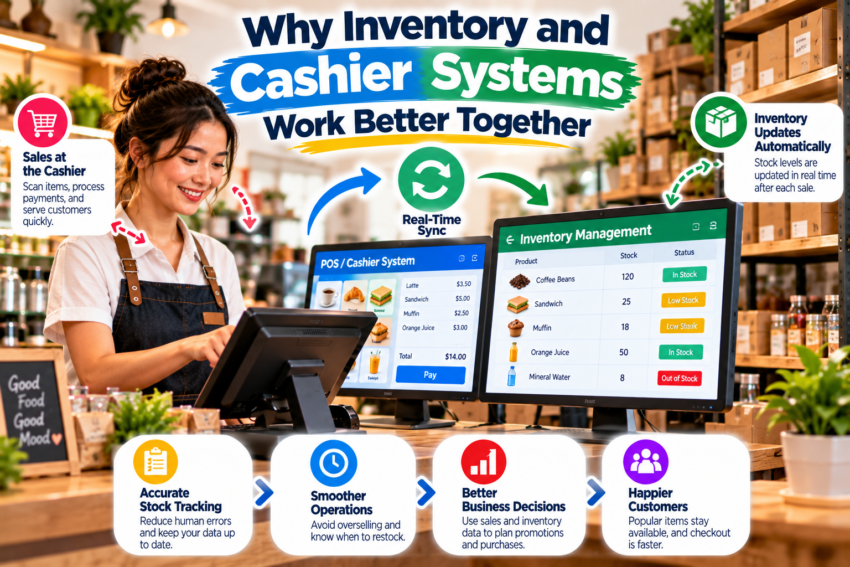
Sales and inventory are closely connected.
Every time a product leaves the store through a legitimate sale, inventory changes. Connecting those two processes can save a business considerable manual work.
Suppose a store has 25 phone chargers.
A customer buys two.
Instead of recording the sale and later updating a separate spreadsheet, an integrated POS can reduce the inventory count automatically.
Now imagine that happening across 1,000 products.
The time savings become obvious.
Better Reordering Decisions
Inventory data can help owners identify products approaching low-stock levels.
This does not mean software should make every purchasing decision automatically. Seasonal demand, supplier delays, promotions, and local events can all affect sales.
But accurate information gives managers a better starting point.
Identify Slow-Moving Products
Fast sellers receive plenty of attention. Slow sellers deserve attention too.
Products that remain on shelves for months occupy space and tie up money.
POS reports can help reveal which products move slowly so the business can investigate why.
Maybe the price is too high. Maybe the location is poor. Maybe customers simply do not want the product.
Data does not answer every question, but it tells you which questions are worth asking.