Managing a retail business has become increasingly complex as customer expectations continue to evolve. Many retailers now operate physical stores alongside online shops, marketplaces, and pop-up locations, making inventory control, sales tracking, and customer management more challenging than ever. To stay competitive, businesses need a Point of Sale (POS) system that can streamline operations while providing real-time visibility across all sales channels.
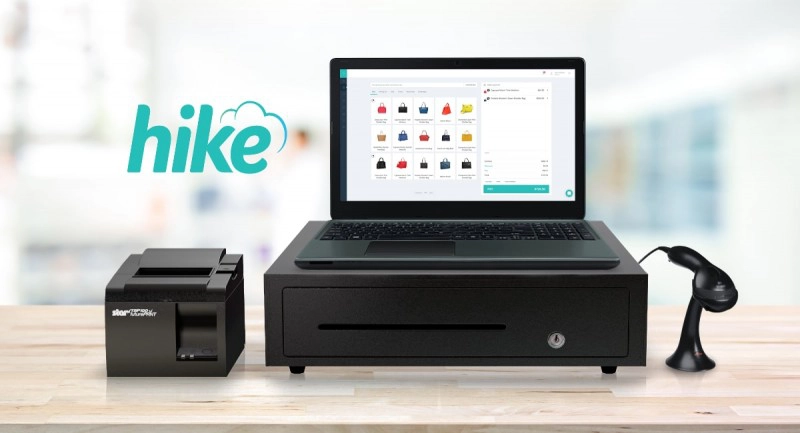
Hike POS is a cloud-based retail management platform designed to help businesses simplify day-to-day operations. Known for its multi-store capabilities, inventory management, and omnichannel features, Hike has attracted retailers looking for a flexible solution that grows with their business.
In this review, we’ll explore Hike POS in detail, including its features, pricing considerations, advantages, disadvantages, and whether it remains a suitable POS system for retailers in 2026.
What Is Hike POS?
Hike POS is a cloud-based point-of-sale system developed primarily for retail businesses. It combines payment processing, inventory management, customer relationship management (CRM), employee administration, reporting, and eCommerce integration into a single platform.
Because the software operates in the cloud, business owners can monitor their stores remotely while keeping inventory and sales information synchronized across multiple locations.
Hike POS is suitable for businesses such as:
- Clothing stores
- Shoe retailers
- Gift shops
- Electronics stores
- Sporting goods retailers
- Home décor businesses
- Beauty product stores
- Specialty retailers
- Multi-location retail chains
Its scalability makes it a practical choice for businesses planning to expand beyond a single store.
Key Features of Hike POS
1. Multi-Store Management
One of Hike POS’s standout features is its ability to manage multiple retail locations from one centralized dashboard.
Business owners can:
- Monitor sales across stores
- Compare store performance
- Manage inventory centrally
- Transfer stock between locations
- Control pricing
- Track employee activity
This centralized management reduces administrative work and improves operational consistency.
2. Advanced Inventory Management
Inventory management is one of the platform’s strongest capabilities.
Hike allows businesses to:
- Track inventory in real time
- Receive low-stock alerts
- Manage product variations
- Create purchase orders
- Monitor supplier information
- Transfer inventory between locations
- Scan barcodes
These tools help minimize stock shortages while reducing excess inventory.
3. Omnichannel Selling
Today’s customers often shop across multiple channels.
Hike supports omnichannel retail by helping synchronize:
- Physical store inventory
- Online store inventory
- Customer information
- Sales data
- Product catalogs
Keeping information synchronized helps businesses deliver a more consistent customer experience while reducing manual updates.
4. Customer Relationship Management (CRM)
Customer loyalty is an important driver of long-term retail success.
Hike includes CRM tools that enable businesses to:
- Build customer profiles
- View purchase history
- Track customer spending
- Create loyalty programs
- Manage customer communication
These features help businesses improve customer retention and personalize marketing efforts.
5. Sales Reporting and Analytics
Data-driven decision-making is easier with comprehensive reporting tools.
Hike provides reports covering:
- Daily sales
- Revenue trends
- Product performance
- Inventory movement
- Employee sales
- Customer purchasing patterns
- Profit analysis
These reports help retailers understand business performance and identify opportunities for improvement.
6. Employee Management
Managing staff becomes more efficient with Hike’s employee administration tools.
Managers can:
- Create staff accounts
- Assign permission levels
- Monitor employee sales
- Track working hours
- Review cashier activity
Role-based access helps maintain operational security while improving accountability.
7. Cloud Accessibility
Since Hike is cloud-based, business owners can access business information from virtually anywhere.
Managers can remotely monitor:
- Inventory
- Sales reports
- Store performance
- Employee activity
- Customer data
Cloud synchronization also ensures that information stays updated across multiple devices.
Payment Processing
Hike supports a variety of payment methods depending on the region and payment provider.
Common payment options include:
- Credit cards
- Debit cards
- Contactless payments
- Mobile wallets
- Gift cards
- Cash
Supporting multiple payment methods allows retailers to accommodate diverse customer preferences.
Hardware Compatibility
Hike POS is compatible with many common retail hardware devices, including:
- Barcode scanners
- Receipt printers
- Cash drawers
- Card readers
- POS terminals
- Customer-facing displays
Businesses often have flexibility when choosing compatible hardware, helping reduce implementation costs.
Pricing Overview
Hike POS is offered as a subscription-based service.
Pricing generally depends on:
- Number of store locations
- Required features
- Inventory size
- Hardware requirements
- Optional integrations
Businesses should compare available plans and evaluate both software subscriptions and payment processing fees before making a purchasing decision.
Advantages of Hike POS
Excellent Multi-Store Support
Businesses with several locations benefit from centralized management and reporting.
Strong Inventory Management
Advanced inventory tracking improves stock accuracy and purchasing decisions.
Cloud-Based Platform
Owners can manage operations remotely from almost anywhere.
Omnichannel Retail
Inventory synchronization supports both online and physical sales channels.
Comprehensive Reporting
Detailed analytics provide valuable business insights.
Customer Management
Built-in CRM tools help strengthen customer relationships.
Potential Limitations
Although Hike POS offers many strengths, there are a few considerations.
Subscription Costs
Businesses should evaluate recurring software costs as they scale.
Retail-Focused Design
The platform is primarily designed for retailers rather than restaurants or service businesses.
Learning Curve
Businesses using advanced inventory and multi-store features may require additional staff training.
Third-Party Integrations
Some specialized business workflows may require additional integrations depending on operational needs.
Which Businesses Benefit Most from Hike POS?
Hike performs particularly well for:
Fashion Retailers
Managing product variants such as size and color becomes significantly easier.
Specialty Retail Stores
Businesses with diverse product catalogs benefit from advanced inventory management.
Multi-Location Businesses
Centralized dashboards simplify expansion and performance monitoring.
Electronics Retailers
Accurate inventory tracking helps manage high-value products.
Home Goods Stores
Stock transfers between locations improve inventory efficiency.
Hike POS vs. Other Popular POS Systems
| POS System | Best For | Key Strength |
|---|---|---|
| Hike POS | Multi-store retailers | Inventory and centralized store management |
| Shopify POS | Omnichannel retailers | Online and offline sales integration |
| Lightspeed Retail | Growing retailers | Advanced inventory and reporting |
| Square POS | Small businesses | Easy setup and affordability |
| Clover POS | Small retailers | Flexible hardware ecosystem |
Each solution offers unique advantages depending on the size and operational complexity of the business.
Security Features
Protecting customer information and payment data is a priority for every retail business.
Hike includes features designed to support secure business operations, such as encrypted payment processing and role-based user permissions.
Business owners should also follow security best practices by:
- Using strong passwords
- Keeping software updated
- Limiting employee access based on job responsibilities
- Monitoring account activity regularly
These practices help reduce operational risks and protect sensitive information.
Customer Support
Hike provides various support resources, including:
- Online knowledge base
- User documentation
- Email support
- Live chat
- Product tutorials
Support availability may vary depending on subscription level and business location.
Pros and Cons
Pros
- Excellent multi-store management
- Strong inventory tracking
- Cloud-based accessibility
- Omnichannel capabilities
- Comprehensive reporting
- Customer relationship management
- Flexible hardware compatibility
- Scalable for growing retailers
Cons
- Subscription fees should be considered carefully
- Primarily designed for retail businesses
- Some advanced features require staff training
- Certain integrations may involve additional costs
Is Hike POS Worth It in 2026?
For retailers managing multiple locations or planning future expansion, Hike POS remains a competitive cloud-based solution in 2026.
Its strengths in inventory management, centralized store administration, customer management, and reporting make it well suited for businesses that need greater operational visibility. Retailers seeking a scalable platform that supports omnichannel selling and multi-store management are likely to appreciate Hike’s capabilities.
While businesses should compare subscription costs with competing platforms, Hike offers a balanced combination of flexibility, functionality, and ease of use.
Final Verdict
Hike POS is a capable cloud-based point-of-sale solution built with growing retail businesses in mind. Its advanced inventory management, multi-store capabilities, omnichannel support, and comprehensive reporting provide retailers with the tools needed to operate more efficiently and make data-driven decisions.
Although it may not be the ideal choice for restaurants or businesses with very basic POS needs, it excels in retail environments where inventory control, centralized management, and scalability are essential.
If your business operates multiple retail locations or plans to expand in the future, Hike POS remains a strong option to consider in 2026. Its cloud-first approach, flexible management tools, and retail-focused functionality make it a valuable investment for businesses aiming to improve operational efficiency and deliver a consistent customer experience across every sales channel.