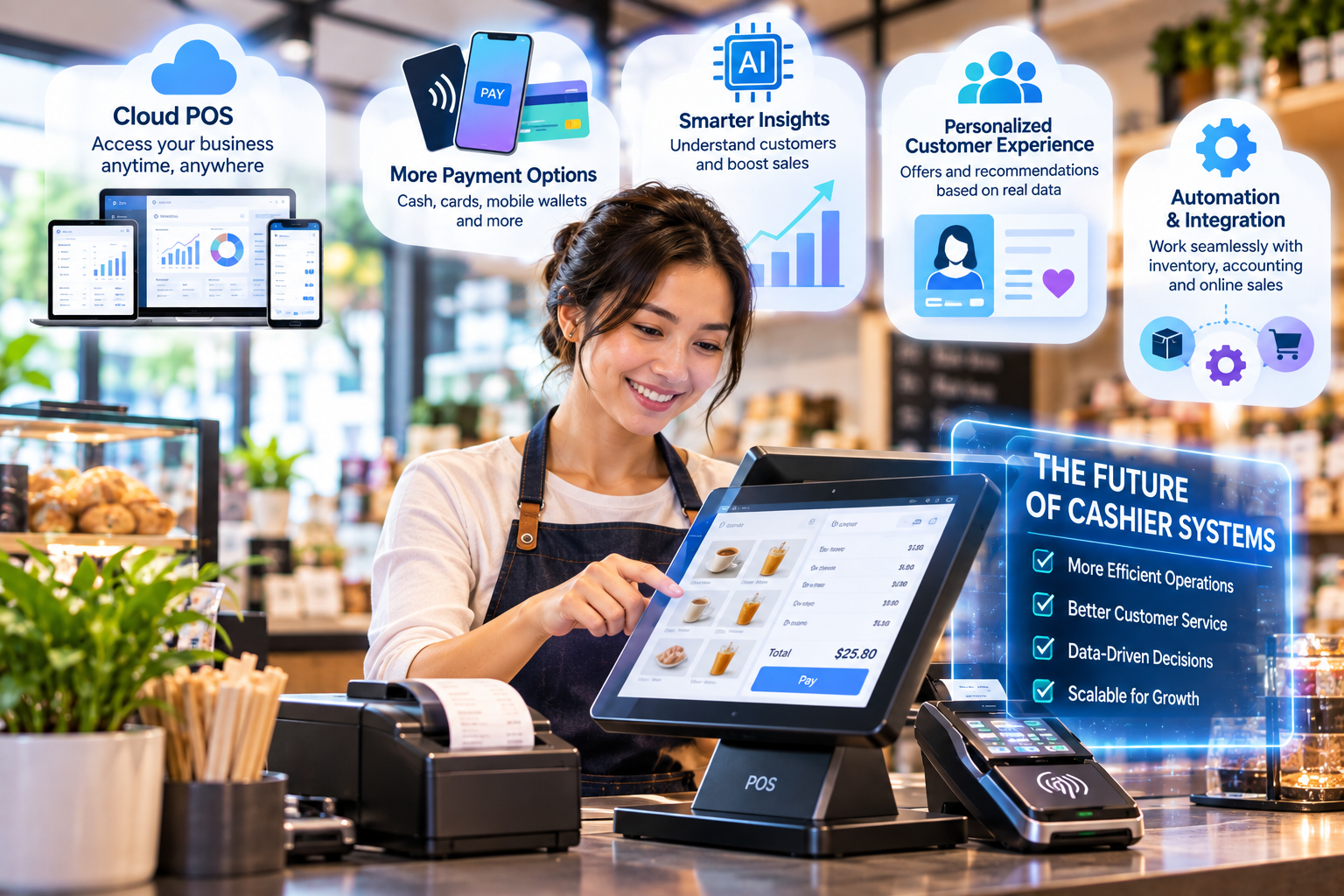
Cashier technology has changed dramatically.
The basic goal—recording a sale and accepting payment—remains familiar, but the surrounding technology continues to evolve.
More Automation
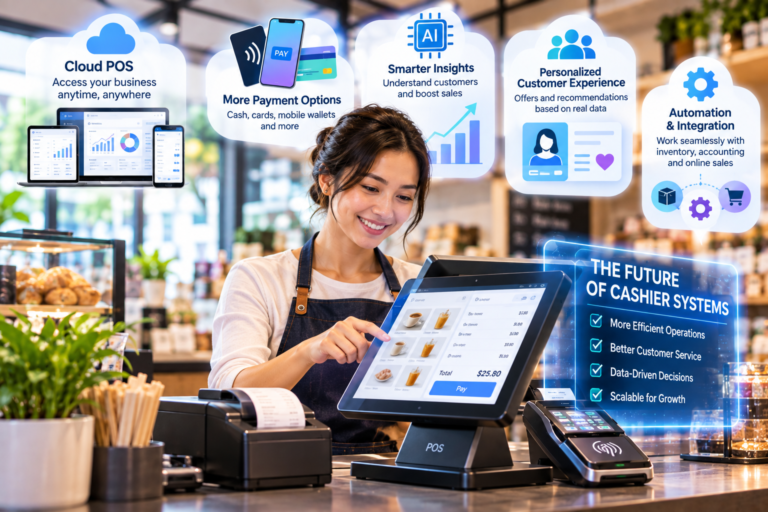
Modern POS platforms increasingly automate repetitive tasks such as inventory updates, reporting, and data synchronization.
The most useful automation is usually the kind customers barely notice.
Better Integration
Businesses increasingly expect their in-store sales, online orders, inventory, accounting tools, and customer programs to communicate.
Integration can reduce duplicate data entry, but only when it is configured properly.
AI May Become More Visible
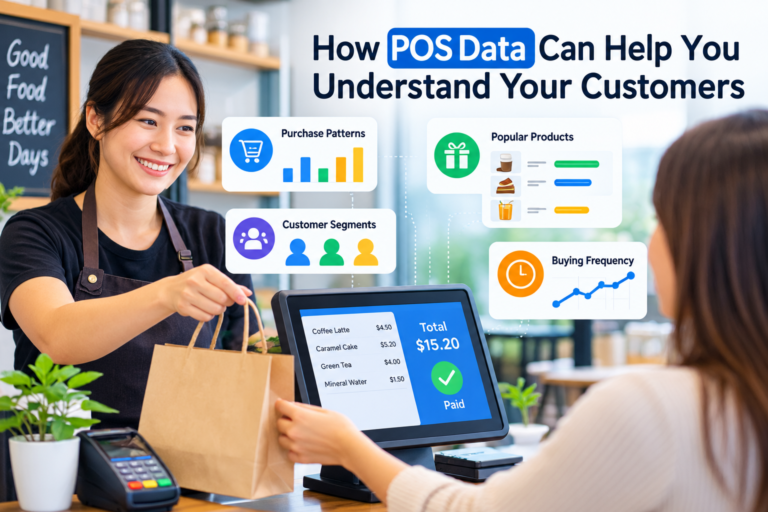
AI can potentially help businesses identify patterns, summarize reports, forecast demand, or make information easier to explore.
However, AI-generated recommendations should still be reviewed rather than treated as automatically correct.
Flexible Checkout Will Continue Growing
Checkout no longer has to happen behind one fixed counter.
Depending on the business, mobile devices, self-service technology, online ordering, and integrated payment options can create more flexible customer experiences.
The Human Element Still Matters
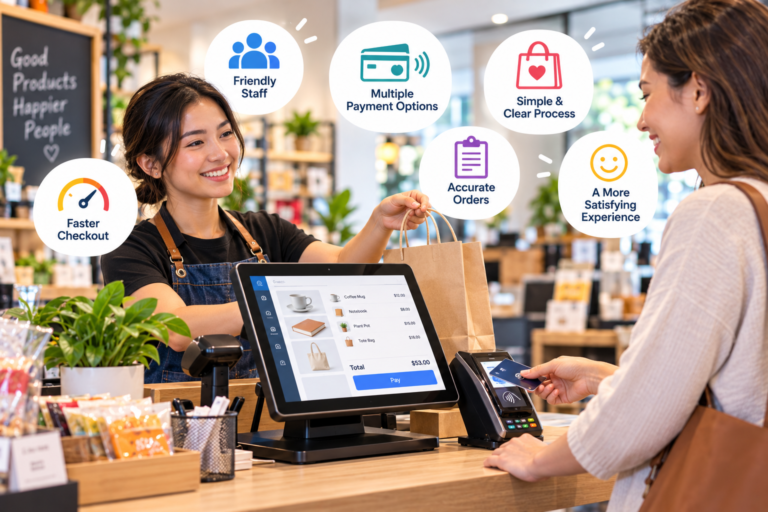
Technology can calculate totals and organize information, but customer service still depends heavily on people.
A friendly cashier who understands the system, communicates clearly, and solves problems can make a stronger impression than an impressive screen.
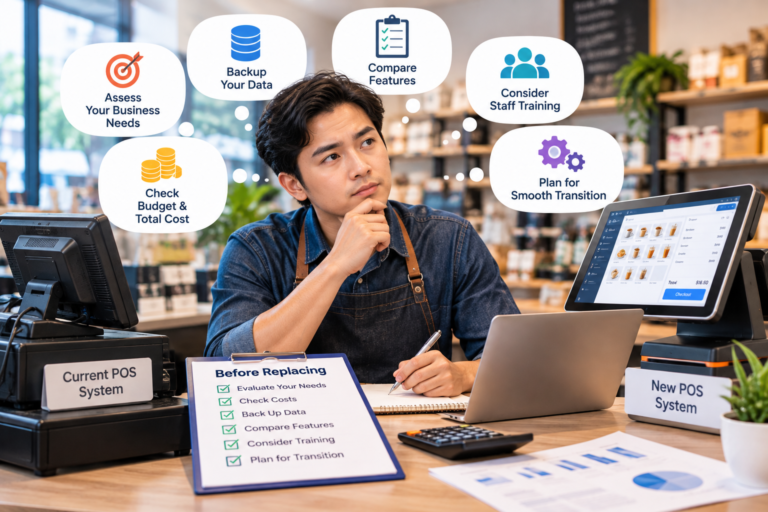
That is worth remembering when upgrading technology.
The future of cashier systems is not simply about replacing people with software. For many businesses, the more useful goal is giving employees better tools so they can serve customers more efficiently.
About the Author